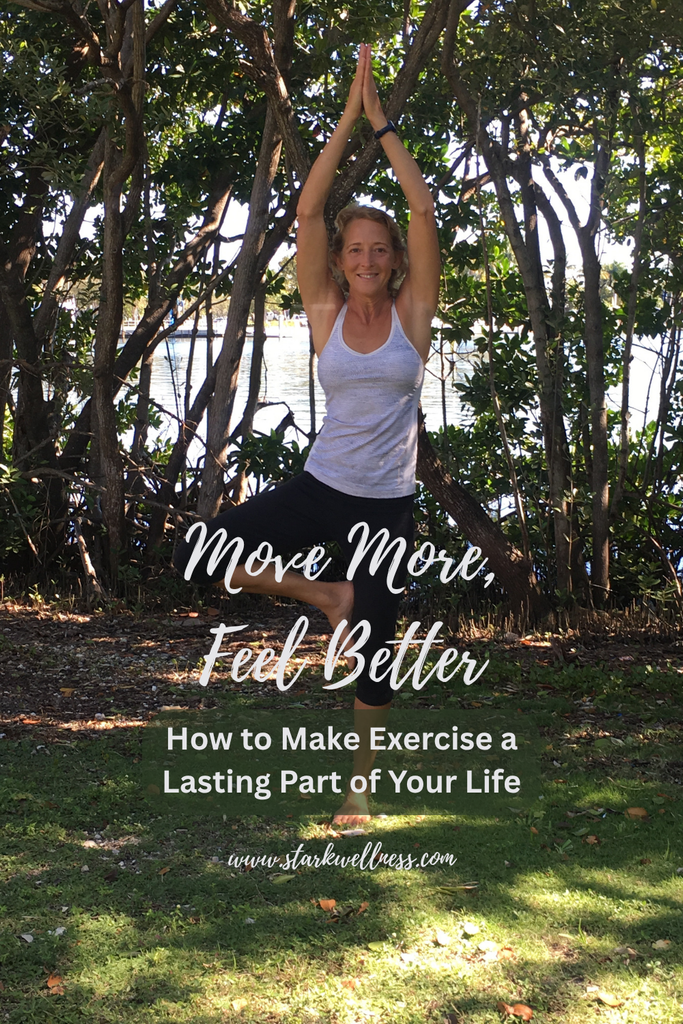
Learning how to make exercise a habit isn’t just about finding the right workout. It’s about creating a routine that fits your life and that you can maintain over time.
Why Exercise Matters
Exercise may be one of the closest things we have to a fountain of youth. Regular physical activity supports heart health, strengthens muscles and bones, benefits the brain, helps manage stress, and can reduce the risk of several chronic diseases. It can also help us maintain our independence and quality of life as we age.
Most of us know exercise is good for us. The challenge is finding the time, choosing activities we enjoy, and sticking with them when life gets busy.
The good news? You don’t need a perfect workout routine to begin experiencing the benefits of movement. You need a realistic starting point and a plan you can maintain.
Let’s look at 7 big benefits of exercise, backed by research.Which of these benefits would make the biggest difference in your life? Perhaps you want more energy, better stress management, greater strength, or the ability to stay active as you age. Keep your answers in mind as you develop your exercise plan.
7 Ways Regular Exercise Supports Your Health
- Helps you stay strong, active and fit as you age
- Supports overall health and immune function
- Supports heart health by helping to lower blood pressure, reduce arterial inflammation, and reduce cardiovascular risk
- Helps regulate blood sugar by improving insulin sensitivity and helping with blood glucose management
- May lower risk for certain cancers
- Supports mental well-being as regular aerobic exercise can lower levels of stress hormones, enhance mood, and potentially reduce symptoms of anxiety and depression
- Helps with menopause as increasing fitness can enhance mood, strength and bone health and may reduce some menopausal symptoms, such as hot flashes and night sweats
Hopefully, this next section will help get you going in the right direction.
How to Make Exercise a Habit That Lasts
First, let’s look at roadblocks, strategies, motivation and ideas to get you going.
When I was overweight, it was easy to make excuses as to why I didn’t have the time to exercise. Looking back, it’s obvious I wasn’t ready to make it important enough. Once I decided to make it a priority, everything fell into place. I started gaining energy, strength, confidence, and I felt better overall. This gave me more motivation to keep going.
Remember, one workout may not transform your fitness, but every workout is an opportunity to benefit your health and build consistency. If you were to exercise just four times a week for a year, that would be 208 workouts. Wow! Do you think you would look and feel any differently at that point? Of course.
Most of us don’t look at the big picture or look into the future to see how our daily decisions shape where we will be 6-12 months from now, much less 10, 20 or 30 years from now. It’s too easy to get discouraged. We want results and we want them NOW!
Unfortunately, it doesn’t work that way. You just have to decide to start, then make a plan and stick to it. With consistency, you’ll give yourself the opportunity to build strength, improve your fitness, and experience the benefits of regular movement over time.
So, the first step is deciding that exercise is a priority and working other things in your schedule around it. If it’s not a big enough priority, the “excuses” can always creep in.
Before starting any activity, think about how active you are now and what a realistic, short-term activity level goal is (for the next 2-3 weeks or so). If you haven’t been very active and you feel pretty out of shape, starting out with 6 days a week isn’t a great idea. Perhaps 3 or 4 days a week is a good place to start.
If you really do want to exercise 5-6 days a week, it’s a good idea to start out with 10-20 minutes a day. Starting out slowly and then gradually increasing the time, intensity and/or frequency of your workouts will not only increase your chances of successfully adding regular exercise as part of your lifestyle, it will gradually build your strength and stamina and reduce the chance of injury.
Make the goal challenging enough but not too challenging that you get discouraged.
- Note: Check with your doctor before starting any new exercise routine.
Selecting Exercises That Are Right for You
There are so many different types of exercise. Hiking, swimming, cycling, pickle ball, yoga, pilates, circuit training, weight lifting, etc…. The key is finding the type of workout that suits your fitness level, your budget, and your preferences.
What are some types of exercise that you have enjoyed in the past? Are you curious about trying some new activities? What classes are available nearby? Are there hiking or running groups in your town? Do you have any limitations? If so, what are you still able to do safely?
There are so many free exercise videos on YouTube. All kinds! It can be fun to experiment with different types of classes and instructors until you find some you really like. The best form of exercise is the one you will actually do and enjoy.

Turning Good Intentions Into Action
Instead of asking yourself “CAN I fit it in?” ask “WHERE can I fit it in?” Finding time for exercise isn’t always easy, especially when you’re balancing work, family, and other responsibilities. Rather than waiting for a free hour to appear, look for realistic opportunities to add movement to your day. Even a short walk or a few minutes of activity is a worthwhile place to start.
I’m not saying it’s going to be easy, but once you get started and see how great you feel (and look) you are going to be surprised at how much more energy you have and how weight loss becomes much easier.
Over time, you may find that exercise becomes something you look forward to. You might notice that you have more energy, feel better afterward, and enjoy having a routine that supports your well-being.
Remember back to the section where we went through the exercise to think about your priorities, goals and your WHY? This is a good time to revisit those goals if exercise is an area where you “feel stuck.” Habits aren’t always easy to change, but you’re worth the effort and in a few short weeks, you’re going to see and feel the difference.
Now, let’s look at some common roadblocks to fitness.
Overcoming Common Roadblocks to Exercise
Even when we understand the benefits of exercise, getting started isn’t always easy. Let’s look at common obstacles and some practical ways to overcome them.
Time
If you struggle with finding the time for exercise, you may be surprised at the simple ways to fit exercise into your day.
Build movement into your day: Take the stairs, walk to as many places as you can, take movement breaks during work, or take phone calls pacing.
Schedule dedicated activity: Set aside 20-30 minutes, or start with shorter sessions if that’s more realistic.
Choose activities you enjoy: Walk, dance, cycle, practice yoga, or explore an activity you’ve always wanted to try. Think about: indoor rock climbing, stand up paddle boarding (SUP), canoeing, hiking, shuffle dancing (I want to try this!), pilates (my favorite), martial arts, tai chi, tennis, pickle ball, local or online fitness classes…the possibilities are endless.
Think about your likes and dislikes when it comes to being active. This will help you to decide what you want to do and how much activity is right for you.
Knowledge
Maybe you feel like you don’t know what exercises to do or how to do them. But you don’t need to know everything about exercise to begin.
Start with an accessible activity, such as walking, and learn as you go. If you’d like to try strength training, yoga, or another unfamiliar activity, look for beginner-friendly instruction. I can also help you get started.
Motivation
You don’t have to feel motivated every day. Make your starting goal realistic, identify why it matters to you, and develop a routine that doesn’t depend entirely on how you feel in the moment.
Once you start exercising, before you know it, you will have created a new habit. And that will feel great.
If you start to talk yourself out of your workout, maybe you can tell yourself, “Do it anyway.” This usually works for me on the days I don’t feel like exercising.
I also love how I feel after I work out (energized and happy), so when I imagine how I’ll feel when I’m done, that’s helpful too!
Remind yourself of your goals and the reasons you wrote those goals. Then ask yourself, “What’s going to get me closer to my goals?”
Note: It’s important to listen to your body. If you’re sick or feel truly wiped out, it’s best to rest and recharge so you can come back even stronger. Also, if you have an injury or health condition, check with your doctor and use your best judgment before returning to your routine. Rest when you need to.
Self-Consciousness
Sometimes we get hung up with feeling self-conscious, and that can hold us back. I remember feeling self-conscious when I would work out at the gym before I became a personal trainer. It was quite intimidating as everyone seemed to know what they were doing and to already be in great shape.
Once I realized I had just as much of a right to be there as they did, slowly I started to feel better about it. And they were all quite nice and some were very helpful.
After a while, the personal training leader took notice of my motivation and consistency and offered to help me become certified. It was the perfect opportunity for me to help people who felt intimidated like I did, and like you may feel right now.
Often, clients have a big weight loss goal, and until they release a few pounds they don’t feel motivated to exercise. This is okay. For some people, focusing first on nutrition, sleep, and other manageable health habits can help them feel ready to add exercise. There’s no single right order. The important thing is to identify a starting point that feels achievable and build from there.
Wherever you are in your fitness journey, that’s your starting point—and that’s okay.
Focus on making progress rather than comparing yourself with others. As you become more consistent, you may notice improvements in your overall well-being, strength, stamina, AND confidence.
Fatigue
It may be another story if the reason you don’t feel motivated is because you feel run down and tired. If you know why you’re tired or run down, addressing that as soon as possible would be the first step.
For example, you may not be getting adequate sleep, you may not be eating enough or eating too much, or you could be dealing with way too much stress. If you can’t get through your day without caffeine, it could indicate a problem. Finding out the cause now can get you on the road to feeling better and getting better results.
If you frequently feel exhausted or struggle with persistent fatigue, don’t assume that you simply need more motivation. Sleep problems, stress, nutrition, medications, and underlying health conditions can all contribute. If fatigue persists or interferes with daily life, talk with your healthcare professional to help identify possible causes.
Boredom
Also boredom can be the enemy of any workout routine, so keep yourself engaged and entertained when needed. Having great music to listen to helps the time fly by. A workout buddy could help tremendously. Variety is a must for me.
If you enjoy having something specific to work toward, consider training for a local walking event, a 5K, or another activity that excites you. You could also find a friend to join you or a group that offers encouragement and accountability.
The goal isn’t to do everything at once. It’s to find ways to move that you enjoy and can continue doing over time.
Creating a Balanced Exercise Routine
Remember the “FITT” Formula
The FITT formula is a framework for designing exercise programs safely, effectively, and tailored to individual needs.
Frequency – Frequency refers to how often you’ll be exercising. The right frequency depends on the activity, your starting point, and your recovery needs.
Intensity – Intensity refers to how hard you’re working during exercise. Your ideal level of effort depends on your fitness level, the activity you’re doing, and your goals. You don’t need to push yourself to the limit to benefit from exercise. Start at a comfortable level and gradually increase the challenge as your fitness improves.
Time – Time refers to how long you exercise. For general health, adults can work toward at least 150 minutes of moderate-intensity aerobic activity each week, along with strength training on two or more days. You don’t need to reach that goal immediately. Start with what feels manageable and gradually build from there. Even short bouts of movement can be beneficial.
Type – Type refers to the kind of exercise you do. It’s best to mix up your routine and incorporate a combination of aerobic activity, strength training, and balance or flexibility work as appropriate to your needs and goals.
Look at how often you’ll exercise, what type of exercise you’ll be doing, how much effort you can put in, and how long your workouts will be. Planning ahead for exercise each week is the best way to make sure something else doesn’t get in the way.
Note: the FITT principle is a tool for planning exercise, not a rigid formula that everyone must follow.
Fitness Gadgets
Fitness trackers can help you understand how active you are throughout the day. Options range from basic pedometers to smartphone apps and wearable fitness trackers. Some people really enjoy using such devices to mark their progress.
If tracking your steps motivates you, start by observing your usual daily total. Then consider setting a realistic goal to gradually increase your activity. You don’t need to reach 10,000 steps to benefit from moving more.
Workout Variety
Once you’re warmed up, you can choose from four different types of exercise for overall physical fitness: cardiovascular activity, interval training, strength conditioning, and flexibility training. These don’t all have to be done during the same workout but doing each on a regular basis will result in balanced fitness.
Cardiovascular Activity
Start by doing an aerobic activity, like walking, swimming, cycling or running. To ensure you’re working at an optimum level, try the “talk test”. Moderate-intensity activity generally allows someone to talk but not sing comfortably.
Interval Training
Interval training is a great option to consider. It involves alternating periods of higher effort with periods of easier activity or rest. For example, you might alternate a few minutes of comfortable walking with a slightly faster pace.
Strength Conditioning
Strength training will not bulk you up; it’s beneficial for women and men alike. It helps build and maintain muscle and strength, supports bone health, improves balance and stability, and makes everyday activities easier. You don’t need to worry about accidentally developing an extreme physique; significant muscle growth takes sustained, specific training over time.
You can use body-weight exercises, resistance bands, free weights, or weight machines. Start with manageable resistance, focus on proper technique, and gradually increase the challenge as you become stronger.
Flexibility Training
Gentle stretching can help maintain or improve range of motion. There should be no forcing a stretch or pushing through pain.
Flexibility training can include gentle dynamic movements for warming up before exercise or sustained static stretches after a workout.
Some people find it helpful, relaxing and enjoyable to have a long flexibility session once or twice a week. This could be a restorative yoga, yin yoga, or yoga nidra class; or it could just be a long stretch session.
Keeping Exercise Safe and Building Consistency
This article is intended as a general guide to becoming more active. If you’re new to exercise, have a chronic health condition or injury, or are unsure which activities are appropriate for you, consult a qualified healthcare professional for individualized guidance. Choose a starting point that suits your current abilities and increase your activity gradually.
The best way to avoid problems is to prevent them. Here are some ways to prevent common minor injuries, sore muscles or cramps:
- Increase your activity level, frequency and intensity gradually.
- Drink plenty of fluids (especially water) before, during, and after being active.
- Warm-up before every activity, and cool-down afterwards (5-15 minutes).
- Choose activities appropriate for your current fitness and abilities.
- Wear suitable footwear and use proper technique.
- Allow recovery time, especially when you’re beginning strength training.
- Stop exercising and seek appropriate medical advice if you experience unusual or concerning symptoms, such as chest pain, fainting, or severe or unusual shortness of breath.
To-Do
1. Decide which days and times you will exercise for the next 4 weeks. Put it on your calendar because it’s an important appointment for yourself!
2. Determine what type of exercise you will do during the next 4 weeks and how long each workout will be.
3. Call a workout buddy if you want to. Do you have a friend that can join you to help be your accountability partner and also make it more fun?
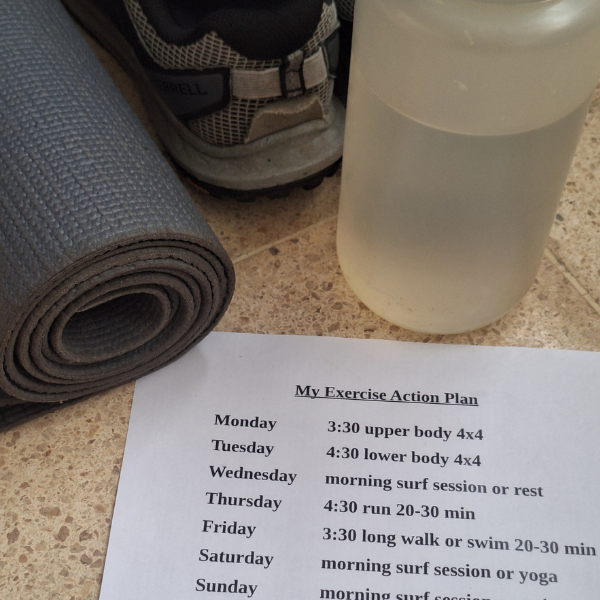
Your Exercise Action Plan
Let’s turn your intentions into action! Get out a pen and paper or print this article.
For the next four weeks, I’m going to exercise _____ times per week for approximately _____ minutes per session.
The activities I’ll focus on are ________________________________________________________________________________.
I’ll schedule my workouts for these days and times: ______________________________________________________________.
My personal reason for wanting to become more active is: _________________________________________________________.
One potential obstacle I might encounter is _____________________________________________________________________.
If that happens, I can _______________________________________________________________________________________.
At the end of four weeks, I’ll evaluate how I’m feeling, celebrate my progress, and decide what adjustments will help me continue building this habit. My goal is to make movement a regular part of my life in a way that feels enjoyable, realistic, and sustainable. I can do this!
Important notes:
Be sure to put your exercise schedule on your calendar. Map it out in detail. But remember a schedule should be supportive, not become a source of guilt. If a plan isn’t working, adjusting it is part of the process.
In fact, it’s a good idea to have a minimum version of the plan for difficult days. People often make a plan for an ideal week but don’t decide how to respond when real life gets in the way.
For example, if you plan to walk for 30 minutes, you could decide in advance that, on a particularly busy day, a 10-minute walk still counts. This will help preserve the habit without treating every deviation from the original plan as failure.
Start Where You Are, and Keep Moving Forward
Building an exercise habit doesn’t happen overnight. It takes time to find activities you enjoy, develop a routine that fits your life, and discover what helps you stay consistent. There will be weeks when everything goes according to plan and others when you need to adjust. That’s okay!
The goal isn’t perfection. It’s making movement a regular part of your life in a way that supports your health, energy, and overall well-being.
Start small. Celebrate your progress. Pay attention to how you feel, and give yourself credit for the effort you’re making. Every step you take toward a healthier, more active life is an investment in yourself.
You don’t have to do it all today. You just have to take the first step.
Let’s create a life you love!