One diet doesn’t work for everyone. If it did, there would only be one diet.
If you’ve ever lost weight on a diet only to gain it back, you know how discouraging that cycle can be. You may even have wondered what you were doing wrong.
But struggling to maintain weight loss doesn’t necessarily mean you lack willpower. Weight regulation is complex, and restrictive eating plans can be difficult to sustain. Changes in hunger and metabolism can also make maintaining weight loss challenging.
The good news? You can take a different approach—one that focuses on nourishing your body, understanding your individual needs, and building healthy habits you can maintain over time.
Let’s look at why restrictive diets so often disappoint us and explore five ways to support your health and weight-related goals without making food a constant source of stress.
Why Most Diets Don’t Work Long-Term
Restrictive strategies set us up for failure in the long run. When we drastically restrict calories, our metabolism can slow down while hunger hormones can increase. The body may break down muscle tissue for energy if protein intake and resistance exercise are inadequate. These are reasons why sustainable, balanced weight loss is usually more successful than crash dieting.
As a society, we’ve been falling victim to the diet mentality for way too long, and then we blame ourselves because it doesn’t work.
It’s not your fault!
Weight regain is common. Severe restriction can increase hunger, reduce energy expenditure, and make a plan harder to sustain. Difficulty maintaining weight loss isn’t simply a failure of willpower.
This is why diets don’t work long-term….not to mention severe or prolonged restriction can increase the risk of nutritional deficiencies and other health complications, depending on the nature and extent of the restriction.
Dieting just rarely works!
Imagine learning how to eat in a way that helps you look and feel better, experience better health, and have more energy. And if your goal is to lose weight, imagine achieving results that last for the long-term—not simply losing weight, but learning to eat in a way that supports lasting change.
Please realize and remember that you are amazing just the way you are!
You are not the number on your scale. I know what it’s like to have that as a major focus because I’ve been there, too.
For years, the number on the scale determined whether I thought I’d had a ‘good’ week. Looking back, I realize I was measuring the wrong thing.
If the scale stresses you out, hide it for a while as you focus your energy on: eating healthier, improving your digestion, being more active, and taking better care of yourself.
This is an opportunity to put some focus back on YOU.
Make that commitment.
To make progress towards your goals, you have to be involved and participate 100%.
But it doesn’t have to be complicated, restrictive or feel like deprivation. Quite the contrary; food is good and you don’t have to fear it. You needn’t be deprived of it or demonize it in order to reach your goals.
Healthy Weight Loss Without Dieting: What to Do Instead
Be curious, open minded and focused, and you’ll learn that there are many things that will help you on your journey to better health, including reaching and maintaining your ideal weight.
Be open to new ideas, new foods and learning to tune in to the signals your body is giving you about the foods you eat. Step out of your comfort zone and explore new foods, new tastes, and new possibilities.
You don’t have to overhaul your entire life to support your health. Start by getting curious about your habits, learning what helps you feel your best, and making small changes you can sustain.
Here are five ways to move toward better health and, if weight loss is an appropriate goal for you, support that journey without relying on another restrictive diet.
* Note: Individual needs vary, and readers with medical conditions or concerns about weight should consult a qualified healthcare professional.
1. Keep a Food Journal
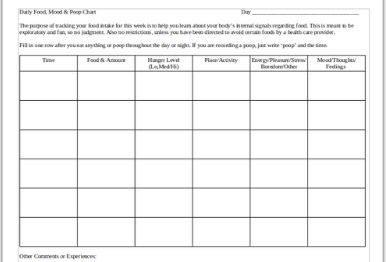
Many of my clients find it helpful to keep a food journal. This can be a big help for tracking different things such as how many fruits/veggies you’re eating, if you’re getting enough protein and carbs for fuel, and if you’re consuming an adequate amount of healthy fats.
Journaling helps you become more conscious of what you’re eating and how different foods may affect you physically and mentally. It can help you make better choices and plan your meals accordingly.
And you can use the tool of journaling to increase awareness of your eating patterns, hunger, satisfaction, energy, and mood—not just tracking food.
You may prefer tracking manually with pen and paper, or you might find it more convenient to use an app such as MyFitnessPal or Chronometer.
You can track for one specific goal or a few. And you do not need to track indefinitely. Sometimes just a few days can be effective. If you have big goals, you may want to consider tracking for 30 days. Your health and your body has gotten to where it is over a long period of time. It takes time to accomplish big goals, so tracking can help.
I encourage you to pay close attention to how you FEEL after you eat. Notice which foods make you feel good and energized and which ones make you feel sluggish, bloated, gassy, tired, light-headed or give you a headache or brain fog after a short time. Some foods may contribute to digestive discomfort or inflammation in certain people.
What’s more, often people are eating very healthy but aren’t aware that something they’re eating may be the cause of their “feeling off.” Just because a food is supposed to be healthy doesn’t mean it’s healthy for YOU, and your unique body.
Every body is different. What works for some, may not work for you. Identifying foods that work well for your body may make it easier to maintain healthy habits over time.
Also, what we eat influences far more than our weight. Food affects our energy, mood, sleep, immune system, and long-term health. While no single food is a cure, nourishing our bodies well gives them the resources they need to thrive and function at their best.
By understanding this and realizing that each of us is one of a kind, it can be a huge eye-opener when you discover the foods that work for you…and those that don’t!
Here are a few considerations for starting a simple food journal:
- Make a list of foods that give you energy every single time you eat them.
- Describe your last three meals and star which ones left you feeling your best two hours later.
- For one to three days, write down your food choices and record your mood and energy levels throughout the day/s.
- Use my free Food-Mood Journal. Click to download.
2. Learn Your Body’s Unique Needs
One tool I often use with clients is Ayurveda, a traditional wellness system that emphasizes individualized nutrition and lifestyle rather than one-size-fits-all advice.
Ayurveda offers a traditional framework for understanding our unique body composition, going far beyond whether we are shaped like a pear or an apple. Learning about your dominant Dosha, the energy of your being, will help you reflect on your body constitution, routines, and lifestyle so that you can move towards a life of balance, vitality and greater health.
Understanding your Dosha can help uncover your strengths, vulnerabilities, natural tendencies, health challenges, and uniqueness. You’ll gather insights and strategies directly applicable to you so you can better harmonize your life.
Imagine if instead of having a weight-loss goal, you commit to personal growth through a truly personalized, aligned path to wellness AND you lose weight safely and naturally along the journey.
Consider what that would feel like.
To me, that sounds way better than dieting.
Get started by downloading my free Ayurveda Dosha Quiz. Once you complete the quiz and send me your results (jennifer@starkwellness.com), I’ll send you a concise guide to help you gain a greater understanding of your unique constitution, correct any imbalances in your health and lifestyle, nourish your mind and body, and live to your fullest potential.
3. Focus on Nutrition, Not Calories, for Lasting Health & Weight Loss
When I work with clients who want to lose weight, we don’t put a huge focus on counting calories.
Some people are more comfortable tracking calories, and that’s fine. But watching calories alone does not equate to healthy eating and balanced nutrition.
Together, we place a stronger emphasis on making food choices that feed your body on a cellular level instead of counting calories. This means building meals around a variety of vegetables and fruits, adequate protein, fiber-rich foods, healthy fats, and other foods that support nutritional needs. When the focus is solely on counting calories, the focus is on a number rather than the value of nutrition; the number often becomes more important than WHAT you’re eating.
It can be helpful to have a daily calorie range goal that is in alignment with your health and/or weight loss goals. It’s important, though, not to become so focused on a number. This can backfire, resulting in your not eating enough, making you feel guilty for enjoying food, and causing more stress.
Counting calories has its place and can be helpful when the number doesn’t become the most important thing.
Quality (of nutrition) over quantity (of calories) is what I encourage my clients….and you….to focus on. Also, while overall nutritional quality matters, energy needs still play a role in weight management.
It’s about committing to making good choices for yourself….and then counting on you. Instead of putting restrictions on yourself, learn as much as you can about your body, your reactions to food, what fuels you and makes you feel alive and energetic.
Then, count on you to gift yourself all that will nourish and support your goal for better health and wellness.
4. Measure Progress Beyond the Scale
When you’re working toward a healthier weight, it’s easy to let the number on the scale determine how you feel about your progress. But that number tells you very little about the many other changes happening in your body and your life.
What if you started paying attention to those changes, too?
Notice how you feel.
Are you waking up with more energy? Do you feel less sluggish in the afternoon? Are you sleeping more soundly, feeling stronger, or finding that everyday activities take less effort? These are all meaningful signs that your healthy habits may be making a difference.
Pay attention to your strength and stamina.
Perhaps you’re walking farther without feeling winded, carrying groceries more easily, enjoying your workouts more, or discovering that you have the energy to do things you once avoided. Celebrate those improvements! They matter.
Tune in to your digestion and hunger cues.
Notice whether your digestive comfort is improving, whether you feel satisfied after meals, and whether you’re becoming more familiar with your body’s signals of hunger and fullness. Learning to respond to your body’s needs can help you develop a more comfortable, sustainable relationship with food.
Recognize your consistency.
Are you preparing nourishing meals more often? Making time for movement you enjoy? Getting enough rest? Finding ways to manage stress that work for you? Building habits you can maintain, even when life gets busy, is an accomplishment worth acknowledging.
Consider how you feel emotionally.
Perhaps you’re feeling more confident in your choices, less preoccupied with food, or more comfortable enjoying a meal without guilt. Maybe you’re beginning to trust yourself instead of feeling that you must follow someone else’s rigid rules.
These changes won’t necessarily happen all at once, and progress won’t always be linear. Some weeks you’ll feel energized and motivated; other weeks, life may get in the way. That’s normal.
Rather than judging your success by a single number, take a moment now and then to reflect on what’s improving in your life. You might even keep a simple journal to record the positive changes you notice.
Your goal isn’t simply to weigh less. It’s to feel better, build strength, nourish your body, and create habits that support your well-being for the long term. And those are worthwhile goals at any stage of your journey.
5. Build a Support System
Another important aspect of making diet and lifestyle changes has to do with your support system. Change is rarely easy, so having people that understand your goals and support the changes you want to make can help.
Think about the people in your life who could be supporting and rooting for you: your partner, another family member, or perhaps a friend or coworker.
Surround yourself with people that have your best interest at heart and truly want you to succeed. Share your goals with someone that will be there to cheer you on and give you encouragement when you need it.
As your wellness coach, I’m here to support you, answer questions, and check in with you along the way.
You don’t need another set of rigid rules to follow. You need an approach that supports your health, fits your life, and allows room for flexibility. Start with one change that feels manageable, give yourself time to practice it, and build from there. Progress isn’t about being perfect—it’s about finding what works for you and continuing to show up for yourself.
If you’re ready to discover what works best for your body, get in touch with me, and let’s begin building a personalized wellness plan that fits you—not another restrictive diet.
Final Reflection: What health advice have you followed simply because someone else said it worked?
Further Reading:
How to FEEL GREAT to Lose Weight Peacefully, Without Die-ting or Abusing Your Body
Fueling Your Body for Both Mental and Physical Health
A Sneak Peak at My Food-Mood Recipe Guide

Hi! I’m Jennifer, your life, love and wellness coach! I help men, women and couples figure out what’s keeping them from being happy and healthy so they can overcome those blocks and determine and implement steps to truly improve their lives, relationships, and physical and mental health. I’m a certified Professional Life Coach and Holistic Health Coach with a background in professional counseling. I’m ready to help you. jennifer@starkwellness.com